
August 12, 2026
How Often Should a Mortuary Fridge Be Professionally Cleaned?
Your mortuary fridge works around the clock. But when was the last time it received a deep, professional clean, and does your current schedule actually meet the standard?
For funeral directors and mortuary managers, the refrigeration unit is one of the most critical pieces of equipment on site. It preserves dignity, supports public health, and sits at the heart of every care-of-the-deceased operation. Yet professional cleaning of mortuary fridges is one area where many facilities fall short, not out of negligence, but simply because the guidance is not always clear.
At Maffsbeco, we will give you a straightforward, standards-aligned answer to the question: how often does a mortuary fridge actually need a professional clean?
Reach out to Bobby or John today get your free assessment booked in.
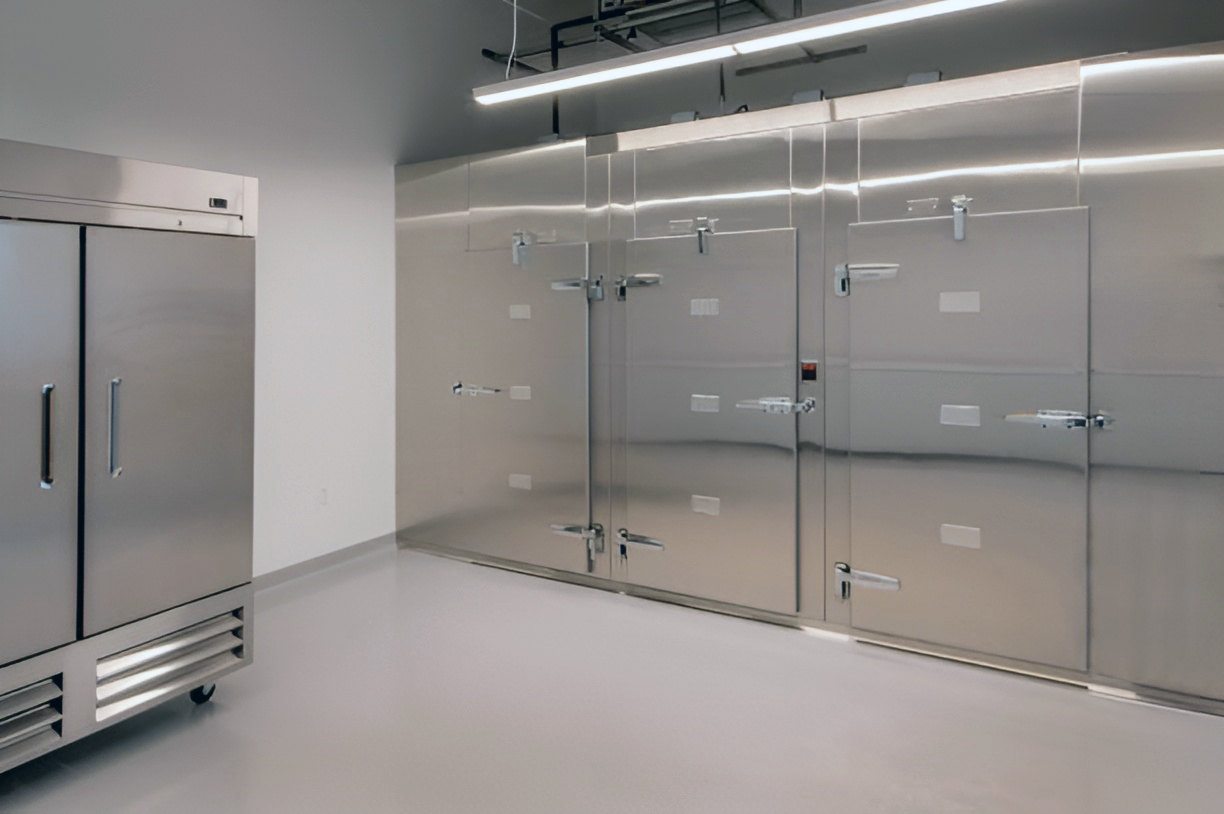
The recommended cleaning schedule
There is no single universally mandated interval that applies to all mortuaries, because risk varies by volume, type of cases handled, and facility layout. However, best practice guidance points to a clear tiered approach:
Why routine wiping is not enough
Daily maintenance, including wiping down surfaces, addressing visible soiling, and checking temperatures, is essential. But it does not substitute for a full professional clean. Mortuary fridges accumulate biological residue, fluids, and odour-causing bacteria in areas that routine cleaning simply does not reach: drainage channels, door seals, fan housings, and the hidden corners of multi-body racking systems.
Left unaddressed, this creates a chain of problems: persistent odours that affect the wider facility, cross-contamination risk, premature deterioration of seals and surfaces, and potential non-compliance with infection control standards under HTM 01 and relevant Public Health guidelines.
Why routine wiping is not enough
Daily maintenance, including wiping down surfaces, addressing visible soiling, and checking temperatures, is essential. But it does not substitute for a full professional clean. Mortuary fridges accumulate biological residue, fluids, and odour-causing bacteria in areas that routine cleaning simply does not reach: drainage channels, door seals, fan housings, and the hidden corners of multi-body racking systems.
Left unaddressed, this creates a chain of problems: persistent odours that affect the wider facility, cross-contamination risk, premature deterioration of seals and surfaces, and potential non-compliance with infection control standards under HTM 01 and relevant Public Health guidelines.
Daily
Visible soiling removed. Surfaces wiped. Temperature log checked. In-house staff
Weekly
Thorough internal clean, door seal inspection drainage check. In-house or contracted.
Monthly
Deep clean of all surfaces, racking, drainage, fan area. Professional contractor.
For high-volume mortuaries, including NHS hospital mortuaries, large independent funeral groups, or facilities handling decomposed or infectious cases, the professional cleaning interval should increase accordingly. Monthly deep cleans become a minimum, and quarterly full decontamination services are strongly advisable.
For smaller, lower-volume operations, a professional clean every 6 to 8 weeks, alongside a rigorous in-house weekly routine, may be appropriate. The key is that this decision is documented, risk-assessed, and reviewed regularly.
What a professional clean should include
Not all cleaning services are equal. When commissioning a professional mortuary fridge clean, you should expect and verify the following:
- Full removal and cleaning of shelving, trays, and racking systems
- Decontamination of all internal surfaces using hospital-grade, body-fluid appropriate biocides
- Drainage channel flush and disinfection
- Door gasket and seal inspection, cleaning, and assessment for replacement
- Fan housing and evaporator area inspection and clean
- Odour neutralisation using appropriate treatment methods
- Post-clean verification and a written service record
That final point, the written service record, matters more than many funeral directors realise. In the event of an infection control investigation, an inspection by the CQC or relevant authority, or a family complaint regarding conditions, documented evidence of your cleaning regime is essential.
Signs your fridge is overdue
Even with a schedule in place, certain signs indicate a professional clean is needed immediately, regardless of when the last one was carried out.
Documentation and compliance
Mortuary operators working within NHS or regulated private healthcare settings are expected to maintain cleaning records as part of their wider infection prevention and control (IPC) documentation. Even for independent funeral homes, maintaining a cleaning log, including professional service records, is considered best practice and demonstrates duty of care.
A competent professional cleaning contractor will provide you with a dated service report after every visit. Ensure this is filed and accessible.